What Is Cleansing Therapy? Dr. Piyush Saxena's Protocol Explained
Cleansing therapy is Dr. Piyush Saxena's 16-hour naturopathy routine using olive oil, citrus juice and Epsom salt. Here is how it works, who should avoid it and what the evidence says.
On this page
- What is cleansing therapy?
- What ingredients are used, and why?
- How does the ~16-hour sequence work?
- What are the ways to do it: home kit, camp or certified centre?
- What do participants typically experience?
- How should you prepare, and what about aftercare?
- Who should not do cleansing therapy without a doctor?
- What does the evidence say?
- How do you get started?
- The bottom line
- Frequently asked questions
- Sources
Quick answer
Cleansing therapy is a naturopathy wellness routine by Dr. Piyush Saxena in which extra-virgin olive oil, citrus juice and Epsom salt are taken in a set order over about 16 hours. It can be done at home with a kit, at a supervised camp, or with a certified practitioner. It is a wellness reset, not a medical treatment.
Key takeaways
- Cleansing therapy uses olive oil, citrus juice and Epsom salt in a fixed sequence over roughly 16 hours.
- You can use a home kit, join a supervised 2-night/3-day camp, or see a certified practitioner.
- Frequent loose stools are expected because Epsom salt is a laxative, so plan a quiet day at home.
- People with gallstones, kidney or heart disease, diabetes on medication, pregnancy or under 18 should see a doctor first.
- There are no clinical trials of liver flushes; the passed 'stones' are likely soap-like material, not gallstones.
- Treat it as a wellness reset and a starting point for lasting habits, not a treatment for illness.
Cleansing therapy is a naturopathy wellness practice in which you take a few kitchen ingredients in a fixed order over roughly 16 hours, usually after a day of light eating. This guide explains Dr. Piyush Saxena's protocol in plain language: what goes into it, how the sequence works, the ways you can do it, what people usually feel, and who should talk to a doctor first. It also covers, honestly, what the science does and does not show.
What is cleansing therapy?
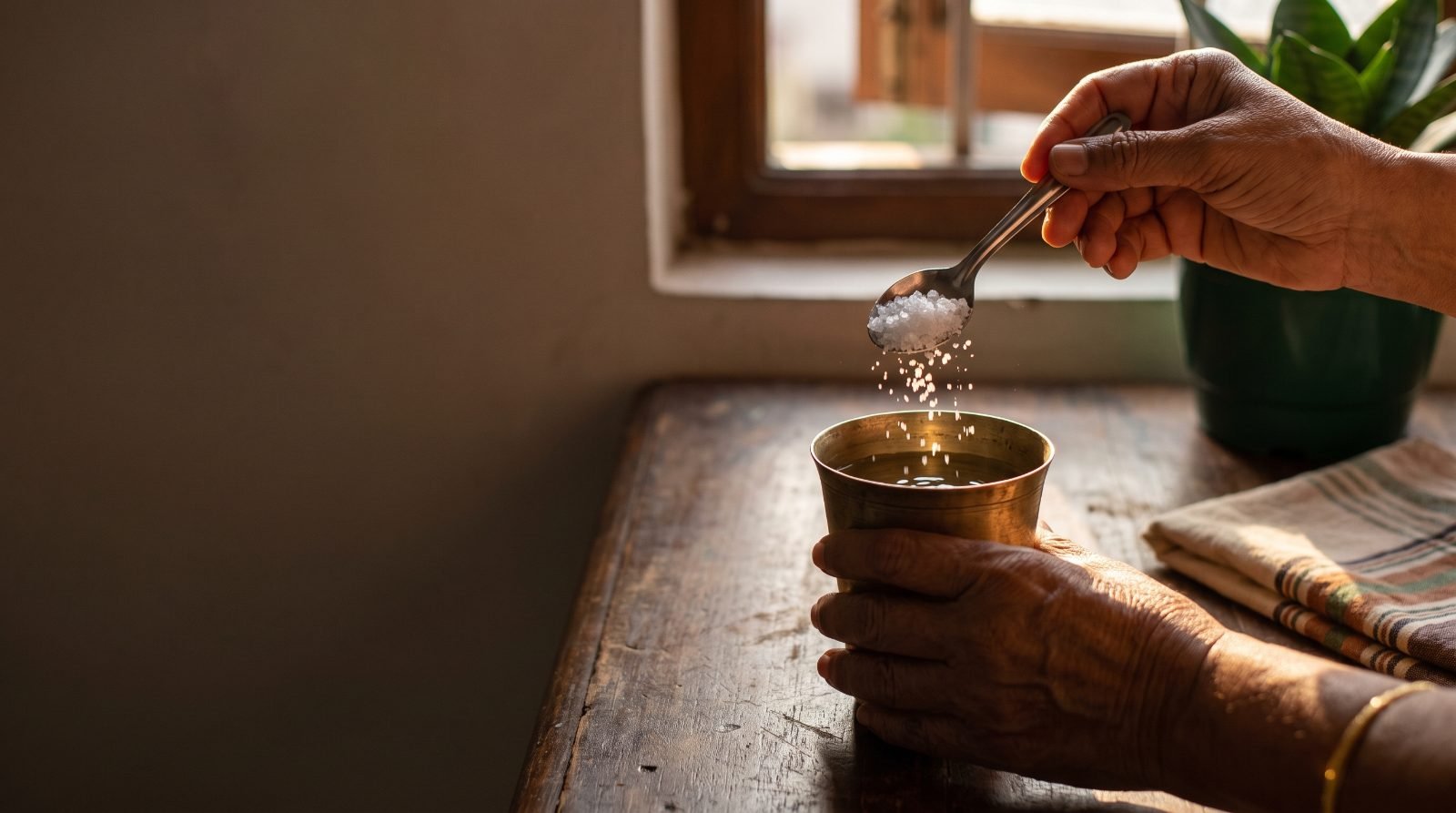
Cleansing therapy is a structured, short naturopathy routine developed by naturopath Dr. Piyush Saxena that uses extra-virgin olive oil, citrus juice and Epsom salt taken in a set sequence over about 16 hours. His website describes it as using "naturally occurring, beneficial substances" found in ordinary kitchens and shops (Dr. Piyush Saxena).
The best-known version is the liver cleanse, but the programme describes 14 cleansing types in total. It is a wellness practice, not a medical treatment, and it does not replace care for any diagnosed condition. You can read the overview on our Cleansing Therapy page.
(In Hindi, people often search for this as क्लींजिंग थेरेपी or लिवर की सफाई.)
What ingredients are used, and why?
The core ingredients are extra-virgin olive oil, fresh citrus juice and Epsom salt; some kits also include corn silk or watermelon seeds. Each plays a different role in the sequence, and each has its own cautions.
| Ingredient | Role in the protocol | What to know |
|---|---|---|
| Epsom salt (magnesium sulphate) | Taken dissolved in water at set times | A saline laxative; it causes loose, frequent stools. Mayo Clinic advises caution in kidney disease because magnesium is cleared more slowly (Mayo Clinic). |
| Extra-virgin olive oil | Taken once, mixed with juice, at night | A large single dose of fat; it can cause nausea. Kits use cold-pressed oil. |
| Citrus juice (e.g. grapefruit, orange, mosambi, lemon) | Mixed with the oil to make it easier to drink | Acidic; may upset a sensitive stomach. Grapefruit interacts with some medicines, so check with your doctor. |
| Corn silk, watermelon seeds (some kits) | Used in some cleansing types as herbal infusions | Traditional uses; limited formal research. |
How does the ~16-hour sequence work?
The sequence runs from the afternoon of day one to the morning of day two, alternating Epsom salt drinks with a single olive oil and citrus mix at bedtime. The exact quantities and clock times are set out in the kit manual and explained by your practitioner on our protocol page; please follow those rather than a version from social media.
In broad strokes, it looks like this:
- Preparation day: light, simple, mostly plant-based meals with little oil, plenty of water, and no alcohol.
- Last meal: a light, early meal, after which you stop solid food at the cut-off time given in the manual.
- Evening: the first Epsom salt drinks, spaced a few hours apart.
- Bedtime: the olive oil and citrus juice mixture, followed by lying down and resting.
- Next morning: further Epsom salt drinks, with frequent trips to the toilet expected.
- Breaking the cleanse: juice or fruit first, then light, easy meals such as khichdi or dal-rice later in the day.
Tip: Plan a quiet day at home with easy toilet access, free from work calls, driving or travel. Keep water and oral rehydration solution within reach.
What are the ways to do it: home kit, camp or certified centre?
You can do cleansing therapy at home with a kit, at a supervised WellthyLife camp, or with a certified therapy centre or Cleansing Therapy Practitioner (CTP). The right choice depends on your health, experience and how much support you want.
| Format | What it involves | Best suited to |
|---|---|---|
| Home kit | The Original Therapy Kit includes Olivko extra-virgin olive oil, Epsom salt and an instruction manual. As of September 2026, the Liver Cleansing kit is listed at ₹1,499, the POP kit at ₹1,999 and combos from ₹2,999 (wellthylife.in). | Healthy adults who have done it before, or who have checked with their doctor and have someone at home. |
| Supervised camp | Usually 2 nights / 3 days, held in cities such as Varanasi, Goa, Kerala, Bangalore, Pune and Hyderabad, with the sequence run by the camp team. | First-timers and anyone who wants guidance, set meals and company. |
| Certified centre / CTP | A trained practitioner guides you, often closer to home. | People who want one-to-one support without travelling to a camp. |
Camp fees vary by city and date, so check current details on our Get Therapy page. Please remember that camps are short wellness stays. They are not hospitals and do not offer inpatient medical care.
What do participants typically experience?
Most people have many loose, watery bowel movements, mainly the next morning, because Epsom salt is a laxative. This is expected and is the main reason to plan a day at home.
- Common: frequent stools, hunger, tiredness, mild cramps, and some nausea after the oil drink.
- Sometimes: broken sleep, headache (often linked to fluids or skipping tea and coffee), and feeling light-headed on standing.
- Reported afterwards: many participants say they feel lighter and more motivated to eat well. These are personal reports, not measured outcomes.
Some people see small, soft, greenish pieces in their stools and are told these are stones. The evidence section below explains why scientists think otherwise.
How should you prepare, and what about aftercare?
Good preparation and a gentle return to normal eating make the experience easier and safer. Think of the days around the cleanse as just as important as the 16 hours themselves.
Before
- Check with your doctor if you have any condition or take regular medicines.
- Eat simply for a day or two: vegetables, fruit, dal, rice or roti, with less oil and fried food.
- Drink water regularly, and cut down on tea, coffee and alcohol.
- Read the manual end to end and set alarms for each step.
After
- Rehydrate steadily with water, coconut water or oral rehydration solution.
- Start with fruit or juice, then light cooked meals; go easy on rich or spicy food for a day.
- Rest; avoid heavy exercise, driving long distances or heat exposure for the rest of the day.
- Use the reset to build habits you can keep, such as more fibre, better sleep and regular walks.
Who should not do cleansing therapy without a doctor?
Several groups should not start cleansing therapy without first getting a doctor's go-ahead, because the fasting, the large oil dose and the Epsom salt each carry specific risks.
- Diagnosed gallstones: a large dose of fat makes the gallbladder contract; if you have stones, a doctor must judge whether this could trigger pain or a blockage.
- Pregnancy or breastfeeding: the protocol has not been studied in pregnancy or breastfeeding.
- Kidney disease: Epsom salt is magnesium, and weaker kidneys clear it more slowly (Mayo Clinic).
- Heart conditions: fluid and salt shifts from repeated loose stools can affect heart rhythm and blood pressure.
- Diabetes on medication: fasting while on insulin or tablets can drop blood sugar dangerously low.
- Under 18: the protocol is designed for adults.
- Recent surgery, especially on the stomach or bowel, and people with bowel conditions such as colitis or Crohn's disease.
- Anyone on regular medicines: frequent stools can affect how medicines are absorbed, so ask about timing.
See a doctor if: during or after a cleanse you have tummy pain lasting longer than 30 minutes, yellow skin or eyes, a high temperature or shivering (NHS), repeated vomiting, blood in your stools, fainting, confusion, or signs of dehydration such as very little urine. Dark urine with pale stools needs urgent attention (NHS).
What does the evidence say?
There are no published clinical trials of liver or gallbladder flushes, so their effects have not been tested scientifically. Here is what the wider evidence shows.
- Detox diets in general: a 2015 review found that "no randomised controlled trials have been conducted to assess the effectiveness of commercial detox diets in humans" (Klein and Kiat, J Hum Nutr Diet 2015).
- Toxins and weight: the US National Center for Complementary and Integrative Health says there is no compelling research that detox diets remove toxins or help with long-term weight management; weight lost is mostly from eating less and usually returns (NCCIH).
- The "stones": in a 2005 letter to The Lancet, doctors Christiaan Sies and Jim Brooker reported that "stones" passed after an olive oil and juice flush were soap-like material formed in the gut from the oil and juice, not gallstones (The Lancet, 2005).
- Your own detox system: the liver, kidneys, gut, lungs and skin already process and remove waste every day (Harvard Health).
So what can cleansing therapy honestly offer? A planned pause from heavy eating, a day of rest, and a clear starting point for better habits. Many people value that. It should not be seen as a way to remove gallstones or to manage any illness.
How do you get started?
Start by reading the steps, checking your health with a doctor if needed, and choosing the format that suits you. Our participant journey walks you through what happens before, during and after a camp, and you can learn more about the founder on the Dr. Piyush Saxena page.
The bottom line
Cleansing therapy is a short, structured naturopathy routine using olive oil, citrus juice and Epsom salt over about 16 hours. Loose stools and tiredness are normal parts of it, and some people should only do it with medical approval. The evidence for liver flushes is thin, so treat it as a wellness reset, not a treatment. If you would like to try it, a supervised camp is the gentlest way to begin.
Medical note: This article is for general information and is not a substitute for advice from a qualified doctor. If you have a health condition, are pregnant or take regular medicines, talk to your doctor before starting any cleanse or diet change.
Frequently asked questions
What is cleansing therapy?
Cleansing therapy is a naturopathy wellness practice developed by Dr. Piyush Saxena. It uses extra-virgin olive oil, citrus juice and Epsom salt, taken in a set sequence over about 16 hours after a day of light eating. The liver cleanse is the best-known type, and the programme describes 14 cleansing types in all. It is not a medical treatment and does not replace care for any condition.
How long does cleansing therapy take?
The core sequence takes about 16 hours, usually from the afternoon of one day to the next morning. Add a preparation day of light eating before it and a gentle day of recovery after it. Supervised WellthyLife camps are typically 2 nights and 3 days, which covers preparation, the sequence itself and a guided return to normal meals.
Is cleansing therapy safe?
For many healthy adults who follow instructions, the main effects are loose stools, tiredness and some nausea. It is not suitable for everyone. People with gallstones, kidney disease, heart conditions, diabetes on medication, pregnancy or breastfeeding, recent surgery, or those under 18 should speak to a doctor first. Stop and seek help for severe pain, yellow skin, fever or repeated vomiting.
Are the green stones passed after a liver cleanse real gallstones?
Probably not. In a 2005 letter to The Lancet, doctors Christiaan Sies and Jim Brooker reported that 'stones' passed after an olive oil and juice flush were soap-like material formed in the gut from the oil and juice, not gallstones. There are no clinical trials showing that liver flushes remove gallstones, so they should not be used for that purpose.
Should I choose a home kit or a camp?
If it is your first time, or you want support, a supervised camp is usually the easier option because the team runs the timings, meals and rest for you. A home kit suits healthy adults who have done it before or have checked with their doctor, and who have a quiet day and someone at home. Certified practitioners offer a middle path.
How much does a cleansing therapy kit cost?
As of September 2026, the wellthylife.in homepage lists the Liver Cleansing kit at ₹1,499, the POP kit at ₹1,999 and combos from ₹2,999. Camp fees vary by city and date, so check the Get Therapy page for current camp details before you book. Prices can change, so always confirm at the time of ordering.
Sources
- Cleansing Therapy — Dr. Piyush Saxena
- WellthyLife homepage (kit prices) — WellthyLife
- Magnesium sulfate (oral route): description and precautions — Mayo Clinic
- Could these be gallstones? (Sies CW, Brooker J. Lancet 2005;365(9468):1388) — The Lancet
- Detox diets for toxin elimination and weight management: a critical review of the evidence — Journal of Human Nutrition and Dietetics
- Detoxes and Cleanses: What You Need To Know — NCCIH
- The dubious practice of detox — Harvard Health Publishing
- Gallstones — NHS
- Jaundice — NHS
We cite peer-reviewed research, government health bodies and the providers’ own published information. Found an error? Tell us and we’ll review it.