Liver Detox: How Your Liver Cleans Itself and How to Help It
Your liver detoxes you every day. Learn how it works, why one in three Indians has fatty liver, and which simple habits genuinely help your liver.
On this page
- How does your liver detox itself?
- How common is fatty liver in India?
- Who is most at risk of fatty liver?
- How to detox your liver naturally: 10 evidence-backed habits
- Do liver cleanses and flushes work?
- Are liver detox supplements safe?
- What are the warning signs of a liver problem?
- The bottom line
- Frequently asked questions
- Sources
Quick answer
Your liver detoxes itself continuously, breaking down alcohol, medicines and waste that leave through urine and stool. You help it most by losing extra weight gradually, exercising 150 minutes a week, cutting alcohol and added sugar, stopping smoking and avoiding unneeded supplements. There is no good evidence that liver cleanses or flush drinks work.
Key takeaways
- Your liver neutralises chemicals on its own; waste leaves your body through urine and stool.
- About one in three Indian adults and children has non-alcoholic fatty liver disease.
- Gradual weight loss, 150 minutes of weekly exercise, less alcohol and less sugar are the best-supported habits.
- Simple Indian swaps like millets for maida and chaas for cold drinks help over time.
- Herbal and dietary supplements are a growing cause of drug-induced liver injury.
- Yellow eyes or skin, dark urine or pale stools need urgent medical attention.
Search for "liver detox" and you will find teas, capsules and overnight flushes promising a cleaner liver. The truth is simpler and more useful: your liver already detoxes your body every minute of every day. This guide explains how it does that, why fatty liver has become so common in India, and the everyday habits that genuinely help your liver do its job.
How does your liver detox itself?
Your liver detoxes itself, and the rest of you, continuously. It breaks down alcohol, medicines and by-products of normal metabolism into forms your body can get rid of, and that waste then leaves through your urine and stool (NIHR Birmingham BRC).
A healthy liver does not need a special product to "switch on" this work. What it does need is protection from the things that overload it: excess alcohol, excess body fat, too much sugar and refined food, and medicines or supplements taken without guidance. So a sensible liver detox is really about removing burdens, not adding potions.
The liver also works as part of a team. Your kidneys, gut, lungs, skin and immune system all share the load, which we cover in our complete full body detox guide.
How common is fatty liver in India?
Very common: roughly one in three Indian adults and children has non-alcoholic fatty liver disease (NAFLD). A 2022 meta-analysis of 50 studies covering 26,484 people found NAFLD in 38.6% of adults and 35.4% of children (J Clin Exp Hepatol, 2022).
The risk climbs sharply with body weight and metabolic health. In the same analysis, 28.1% of average-risk adults had NAFLD compared with 52.8% of high-risk adults, and among children the figure was 12.4% in those without obesity but 63.4% in those with obesity.
India was the first country to add NAFLD to its national programme for non-communicable diseases, in 2021, and revised its guidelines in September 2024 (PIB, 2024). Non-communicable diseases now account for more than 66% of deaths in India.
Tip: Fatty liver is usually silent. Most people feel nothing until it is picked up on a blood test or ultrasound. If you have diabetes, a big waistline or high cholesterol, ask your doctor whether you should be checked.
Who is most at risk of fatty liver?
People with obesity, type 2 diabetes or insulin resistance, abnormal blood fats and metabolic syndrome are most at risk (NIDDK). Many Indians carry extra fat around the middle even at a "normal" weight, so waist size is worth watching alongside the number on the scale.
Sitting for long hours, frequent sweets and fried snacks, sugary drinks and regular alcohol all add to the load. Smoking is a further stress on your overall health.
How to detox your liver naturally: 10 evidence-backed habits
The most reliable way to support your liver is to change the daily habits that overload it. These are drawn from NHS advice on fatty liver (NHS) and the other sources cited below.
- Lose extra weight gradually. If you are overweight, steady weight loss is the main advice for fatty liver. Aim for slow, sustainable change, not a crash diet.
- Move for at least 150 minutes a week. Brisk walking, cycling, swimming, yoga or dancing all count. Split it into 30 minutes on five days.
- Cut back on alcohol, or stop. The NHS suggests no more than 14 units a week, and the WHO says "no level of alcohol consumption is safe" for health (WHO Europe, 2023). Less is always better for your liver.
- Reduce added sugar. Sweetened chai, cold drinks, packaged juices and daily mithai add up quickly.
- Choose whole grains over refined ones. Swap maida and polished white rice for millets, whole wheat and brown or hand-pounded rice where you can.
- Fill half your plate with vegetables and dal. Fibre and protein keep you fuller for longer and make portion control easier.
- Go easy on fried food. Samosas, pakoras, bhature and namkeen are fine occasionally, not daily.
- Stop smoking. This is part of the NHS advice for people with fatty liver.
- Manage diabetes, cholesterol and blood pressure. Take prescribed medicines as advised and keep up regular check-ups.
- Be careful with supplements and self-medication. "Natural" does not mean safe for your liver, as we explain below.
Fatty liver diet India: simple food swaps
You do not need exotic superfoods. Small swaps in a regular Indian kitchen make a real difference over months.
| Instead of… | Try… | Why it helps |
|---|---|---|
| Maida roti, white bread, polished rice | Whole wheat atta, jowar, bajra, ragi, brown rice | More fibre, slower rise in blood sugar |
| Chai with 2–3 spoons of sugar | Chai with less or no sugar | Cuts daily added sugar |
| Cold drinks and packaged juice | Plain water, unsweetened nimbu pani, chaas | Removes liquid sugar |
| Samosa, pakora, namkeen | Roasted chana, makhana, sprouts chaat | Less fat and salt, more protein |
| Daily mithai | A piece of seasonal fruit | Natural sweetness with fibre |
| Fruit juice | Whole fruit | Keeps the fibre, fewer calories |
| Deep-frying in reused oil | Tadka with a measured spoon of oil | Less fat overall |
| Beer or whisky at weekends | Alcohol-free evenings | Less work for your liver |
Do liver cleanses and flushes work?
There is no good evidence that commercial liver cleanses, flushes or detox drinks remove toxins or improve liver health. A liver specialist at NIHR Birmingham notes that your liver already neutralises chemicals on its own (NIHR Birmingham BRC).
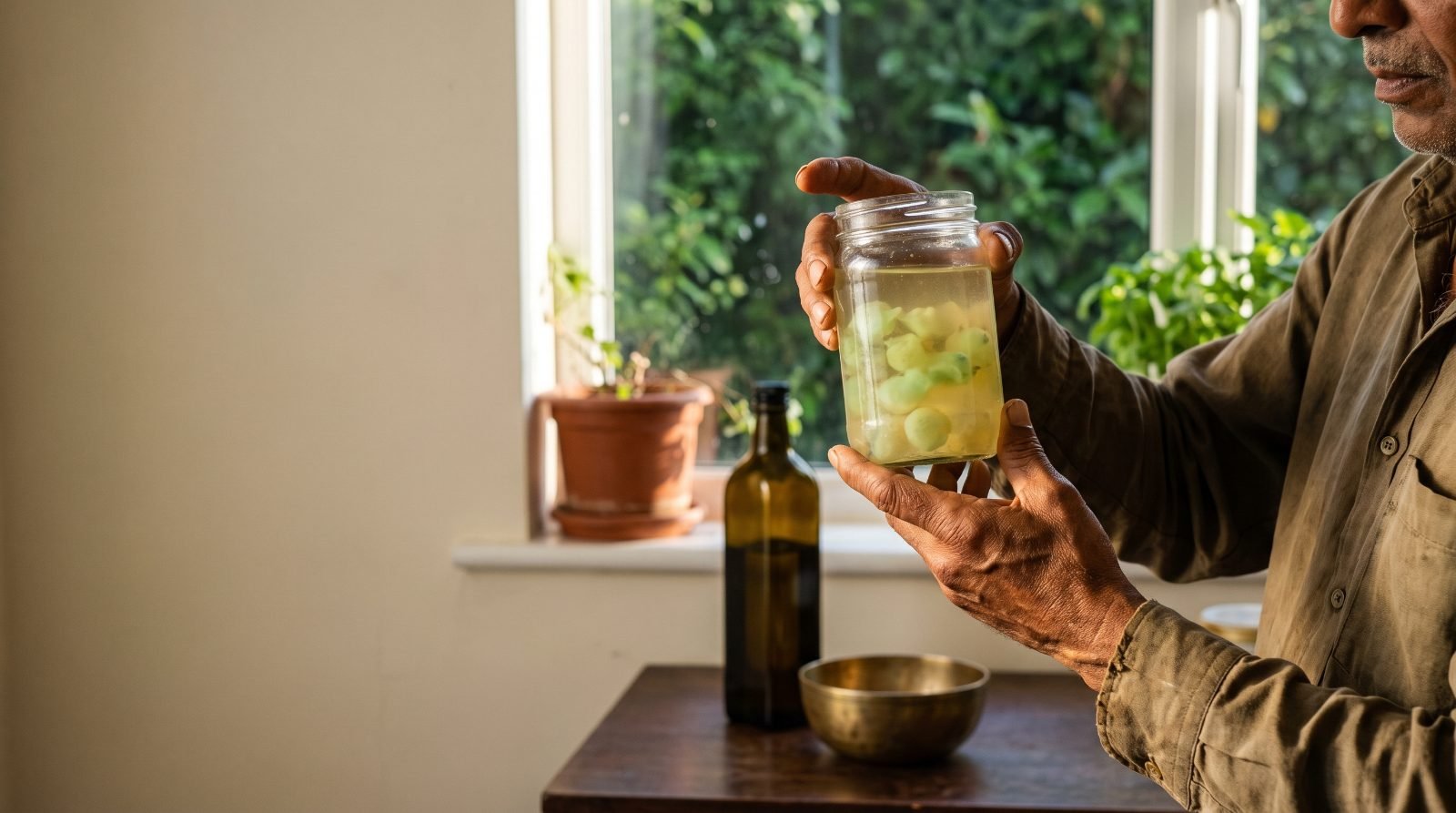
A popular "liver flush" involves drinking olive oil with citrus juice, after which people often see green "stones" in the toilet. When doctors analysed such stones, they were found to be soap-like material formed in the gut from the oil and digestive juices, not gallstones (Sies & Brooker, Lancet 2005).
WellthyLife's own Cleansing Therapy uses a sequence of olive oil, citrus juice and Epsom salt, so we want to be clear: we offer it as a supervised wellness practice. It is not a treatment for gallstones or any liver disease, and anyone with known gallstones or a liver condition should speak to their doctor first.
What about a liver cleanse drink?
A glass of warm water with lemon, jeera water or amla juice can be a pleasant, low-sugar drink, and replacing a cold drink with one of these is a good swap. But no single drink cleanses the liver. The benefit comes from what it replaces, not from a special detox effect.
Are liver detox supplements safe?
Not always, and some can harm the liver. In a large US study, herbal and dietary supplements rose from 7% to 20% of cases of drug-induced liver injury between 2004 and 2013 (Navarro et al., Hepatology 2014). Non-bodybuilding supplements led to death or liver transplant in 13% of those cases, compared with 3% for conventional medicines.
Evidence for milk thistle is "mixed and not strong enough to support routine use", and turmeric supplements (not turmeric in your dal) have been linked to acute liver injury (NIHR Birmingham BRC). Cleveland Clinic also warns that excessive green tea has been linked to liver injury (Cleveland Clinic).
If you take any herbal powder, kadha or capsule regularly, tell your doctor, especially if you also take prescribed medicines.
What are the warning signs of a liver problem?
Yellow skin or eyes, itchy skin, dark urine and pale stools can be signs of jaundice and need urgent medical attention (NHS). Early fatty liver usually causes no symptoms at all, which is why screening matters if you have risk factors.
See a doctor if: your skin or the whites of your eyes turn yellow, your urine is dark or your stools are pale, you have itching with no obvious cause, or you feel persistent tiredness or pain under your right ribs, especially if you have diabetes, obesity or drink alcohol regularly.
(In Hindi, people often search for this as लिवर की सफाई कैसे करें.)
The bottom line
Your liver is already a powerful detox organ. The best "liver detox" is steady weight loss if you need it, regular movement, less sugar, less alcohol, no smoking and caution with supplements. These habits are simple, affordable and backed by evidence.
If you would like guidance in building them, you can read about our protocol or talk to a practitioner about a supervised WellthyLife camp, where you can reset your routine with support.
Medical note: This article is for general information and is not a substitute for advice from a qualified doctor. If you have a health condition, are pregnant or take regular medicines, talk to your doctor before starting any cleanse or diet change.
Frequently asked questions
How can I detox my liver naturally at home?
You cannot speed up your liver's detox with a special product, but you can reduce its workload. Lose extra weight gradually if you need to, aim for 150 minutes of activity a week, cut down on alcohol and added sugar, choose whole grains over maida, and stop smoking. These habits are recommended by the NHS for people with fatty liver.
Is fatty liver common in India?
Yes. A 2022 meta-analysis of 50 Indian studies found non-alcoholic fatty liver disease in 38.6% of adults and 35.4% of children, or roughly one in three people. The risk is much higher in people with obesity or diabetes. India added NAFLD to its national non-communicable disease programme in 2021 and updated its guidelines in 2024.
Do liver cleanse drinks or flushes work?
There is no good evidence that liver cleanse drinks or flushes remove toxins or improve liver health. Green 'stones' seen after an olive oil and citrus flush were shown in a 2005 Lancet report to be soap-like material formed in the gut, not gallstones. A lemon or jeera water can be a healthy low-sugar drink, but it does not cleanse the liver.
Are liver detox supplements safe?
Not always. A large US study found herbal and dietary supplements rose from 7% to 20% of drug-induced liver injury cases between 2004 and 2013. Milk thistle evidence is mixed, and turmeric supplements have been linked to acute liver injury. Tell your doctor about any herbal powder or capsule you take, especially alongside prescribed medicines.
What are the first signs of liver damage?
Early fatty liver usually has no symptoms, so it is often found on a blood test or ultrasound. Later warning signs can include yellow skin or eyes, itchy skin, dark urine, pale stools, tiredness and pain under the right ribs. Jaundice symptoms need urgent medical attention, so see a doctor promptly if you notice them.
Which Indian foods are good for a fatty liver?
No single food fixes a fatty liver, but a balanced Indian plate helps. Choose millets such as jowar, bajra and ragi, whole wheat atta, dal, sprouts, plenty of vegetables and whole fruit. Cut back on sugary chai, cold drinks, mithai, maida and deep-fried snacks. Combined with regular exercise, these swaps support gradual weight loss.
Sources
- Prevalence of Non-alcoholic Fatty Liver Disease in India: A Systematic Review and Meta-analysis — Journal of Clinical and Experimental Hepatology (2022)
- Union Health Ministry Releases Revised Operational Guidelines and Training Manual of Non-Alcoholic Fatty Liver Disease — Press Information Bureau, Government of India
- Symptoms & Causes of NAFLD & NASH — NIDDK
- Non-alcoholic fatty liver disease (NAFLD) — NHS
- No level of alcohol consumption is safe for our health — WHO Regional Office for Europe
- Liver injury from herbal and dietary supplements in the U.S. Drug-Induced Liver Injury Network — Hepatology (2014)
- The truth about detoxes by a liver specialist — NIHR Birmingham Biomedical Research Centre
- Could these be gallstones? — The Lancet (2005)
- Detox or Cleanse: What To Know Before You Start — Cleveland Clinic
- Jaundice — NHS
We cite peer-reviewed research, government health bodies and the providers’ own published information. Found an error? Tell us and we’ll review it.