Corn Silk (Bhutte ke Baal): The Kidney Cleanse Ingredient Nobody Explains
Every corn cob carries a handful of it and almost everyone throws it away. In the kidney cleanse it is the main ingredient — here is what it is and what the evidence actually says.
On this page
Quick answer
Corn silk, or bhutte ke baal, is the bundle of fine strands inside a maize cob. It has a long traditional use as a mild diuretic and is the main ingredient in the kidney cleanse kadha in the Cleansing Therapy protocol — about 50 g boiled, strained, boiled again with fresh water, and drunk as roughly four glasses across a day. Laboratory and animal studies suggest diuretic and antioxidant activity, but robust human trials are lacking, so it should be understood as a traditional practice rather than a proven treatment.
Key takeaways
- Corn silk is the fine strands inside a maize cob — free, and usually discarded.
- It has a long traditional use as a mild diuretic across several cultures.
- The kadha is made by boiling about 50 g, straining, and repeating with fresh water.
- Evidence is mostly laboratory and animal work. Human trials are thin.
- A diuretic is not the same as a treatment for kidney disease.
- Kidney disease, diuretics, blood pressure medicines and pregnancy all need a doctor first.
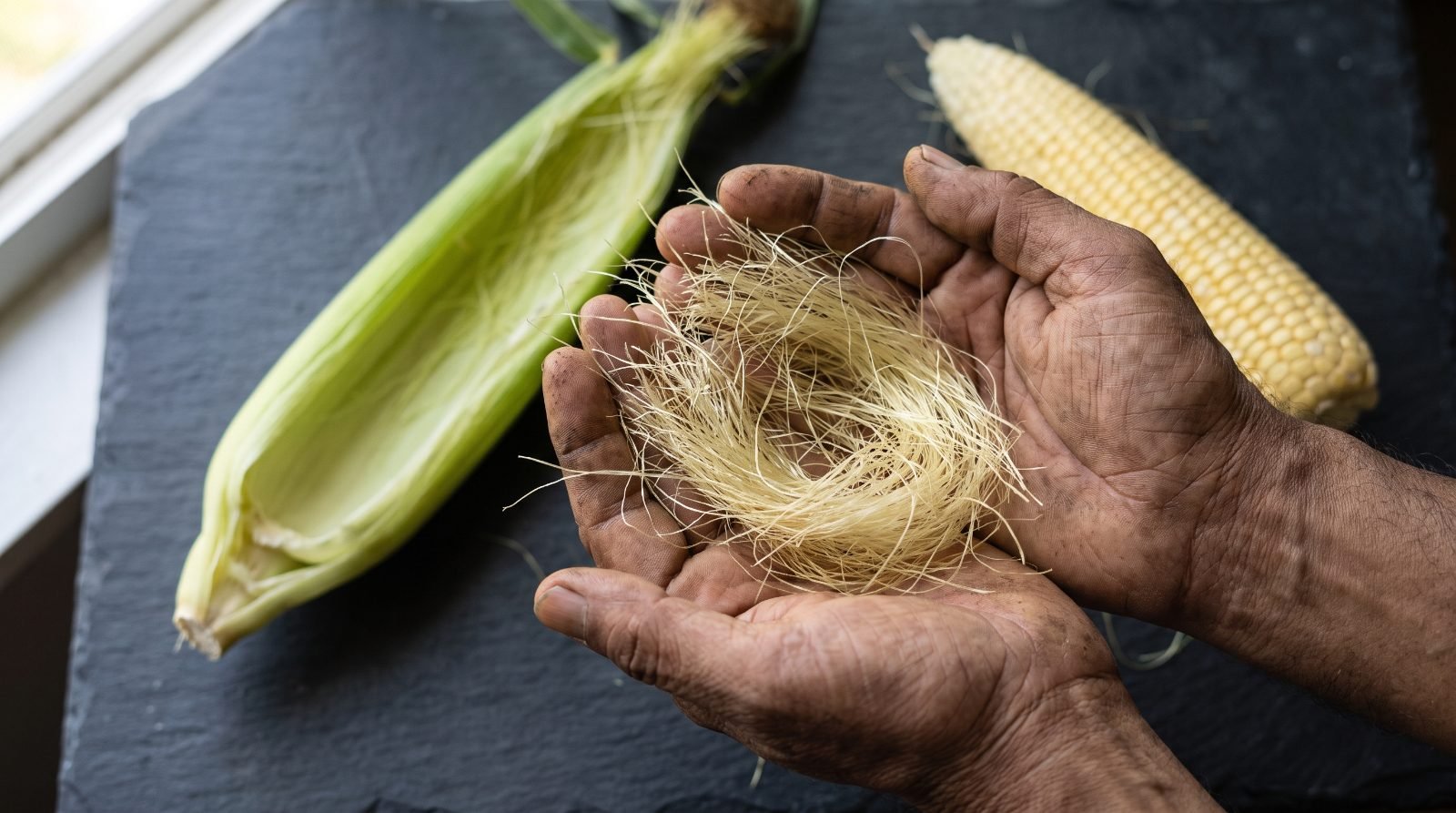
Buy a corn cob from a roadside cart in Mumbai in July and watch what the vendor does. He strips the husk, pulls away a handful of fine pale threads, and drops them on the ground. Every cob carries them. Across India, in a single season, several thousand tonnes of the stuff is thrown away.
Those threads are corn silk — bhutte ke baal, or makai ke baal — and in the kidney cleanse they are not a minor ingredient. They are the whole of it.
It is one of the odder features of this protocol that its kidney component costs nothing and is available on any street corner for four months of the year, and yet almost nobody can tell you what it is or what it does. So here is a proper account, including the part where the evidence runs out.
What corn silk actually is
Each strand is a style — the long tube that carries pollen down to an ovule inside the cob. There is exactly one strand for every kernel, which is why a good cob has such a thick bundle. They start pale green and turn golden, then brown, as the cob matures.
They are not a by-product in the sense of being waste. They are a functioning part of the plant that has been used in traditional medicine across a remarkable spread of cultures — in China, in Turkey, across the Americas and in India — usually for the same purpose: as a mild diuretic and as a remedy for urinary complaints.
That convergence is interesting. Unrelated traditions arriving independently at the same use for the same plant part is not proof of anything, but it is the kind of thing worth noticing.
How the kadha is made
The method in the protocol is unfussy and worth getting right, because the common mistake is to make it too weak.
Take about 50 g of corn silk — fresh, or the same weight dried. Put it in a pot with enough water to cover it comfortably. Bring it to the boil and let it simmer for ten to twenty minutes, until the water has taken colour. Strain the liquid into a separate vessel and keep it.
Now take the same silk and boil it again in fresh water, and strain that into the first lot. Repeat once or twice more, until the silk itself has faded and gives up no more colour. You are extracting in stages rather than trying to do it all at once, which is the difference between a kadha and a weak tea.
Combine everything, let it settle, and pour it off the sediment. You should end up with roughly four glasses, drunk across a single day — warm, cool or at room temperature, whichever you prefer.
It spoils quickly. Keep it in the refrigerator, and make it fresh rather than in bulk. A kadha left out in an Indian summer is not something to drink the next morning.
What the evidence says — and where it stops
This is the part usually skipped, and we would rather set it out plainly.
What there is. Corn silk has been examined in the laboratory and found to contain flavonoids, plant sterols, potassium and various other compounds with antioxidant activity in test conditions. A number of small animal studies report a diuretic effect — animals given corn silk extract produce more urine — and some report effects on blood glucose and blood lipids in rodents. There are a handful of small human studies, mostly with few participants and short durations.
What there is not. Large, well-designed, randomised human trials. There is no good human evidence that corn silk dissolves kidney stones, reverses kidney disease, or improves kidney function in people with impaired kidneys. Anyone telling you otherwise is going considerably beyond what has been shown.
The honest summary is this: corn silk is a traditional preparation with a long history of use and some laboratory support for a mild diuretic action, taken as part of a wellness practice. It is not a treatment for a kidney condition, and it should not be used as one.
Why a diuretic is not a "kidney cleanse"
It is worth separating two ideas that the phrase "kidney cleanse" runs together.
Your kidneys filter something in the order of 142 litres of blood a day. They are not clogged and they do not accumulate a residue that needs flushing out. They are a filter that maintains itself, continuously, and the things that damage them — long-term high blood pressure, diabetes, certain painkillers taken habitually, repeated dehydration — damage them structurally rather than by filling them up.
A diuretic increases urine output. That is a real effect. It is not the same as cleaning an organ, and more urine does not mean more toxins removed — the kidney decides what to excrete based on what is in the blood, not on how much water is passing through.
So what is the corn silk doing? Within the protocol it is a gentle traditional preparation, taken across a day, alongside a large increase in fluid. The fluid is doing most of the measurable work, and drinking enough water genuinely is the best-established thing anyone can do to reduce the risk of kidney stones recurring.
That is a smaller claim than the one usually made for it. It is also one that survives being checked.
Who should not drink it
Speak to a doctor first if you:
- have any kidney condition or reduced kidney function — a diuretic in impaired kidneys is a medical decision, not a home one
- take diuretics already, or blood pressure medicine — the effects add up
- take glucose-lowering medication for diabetes
- are pregnant or breastfeeding
- are allergic to maize — this is the obvious one and it is occasionally forgotten
And a practical note on sourcing. Corn is an agricultural crop and receives the chemicals that go with that. Silk from cobs you shucked yourself is clean under the husk. Silk bought loose from an unknown source is worth rinsing, and worth thinking about.
Drying and storing it
Corn is seasonal and the kadha is not. If you want it out of season, dry your own: spread the silk thinly in the shade — not in direct sun, which bleaches it — until the strands snap rather than bend. Store airtight, away from light. Discard anything that smells musty, because damp silk grows mould readily and that is not something to boil and drink.
Fifty grams dried is a surprising quantity of fresh silk, so save it across several weeks of corn season rather than expecting one cob to do it.
A note on what this is
Corn silk kadha is one part of a wellness practice. It supports nothing that your kidneys are not already doing, it treats no disease, and it is not a reason to delay seeing a doctor about back pain, blood in urine, or swelling. Those are symptoms that need a proper look.
What it is, is a cheap, traditional, unglamorous preparation made from something almost everyone throws away — and that is a more interesting thing to be than a miracle. If you want to read where it sits in the wider protocol, it is published here, and if you want to check whether a cleanse suits you at all, the list of who should not is here.
Medical note: This article is for general information and is not a substitute for advice from a qualified doctor. Cleansing Therapy is a naturopathy wellness practice, not a treatment for any disease. If you have a kidney condition, are pregnant or take regular medicines, talk to your doctor before starting any cleanse or herbal preparation.
Frequently asked questions
What is bhutte ke baal?
The bundle of fine, silky strands you find under the husk of a corn cob. Botanically they are the styles of the maize flower, the part that catches pollen. Each cob has one strand for every kernel.
How do you make corn silk kadha?
Take about 50 g of fresh silk, or 50 g dried. Boil it in enough water to cover it well for ten to twenty minutes, then strain and keep the liquid. Boil the same silk again in fresh water, strain, and combine the two. Repeat once or twice until the colour of the silk fades. Roughly four glasses are drunk across the day. Keep it refrigerated — it spoils quickly.
Does corn silk help with kidney stones?
There is no good human evidence that it dissolves or clears stones, and it should not be relied on for that. If you have stones, that is a matter for your doctor. Drinking enough water is the single most established measure for reducing stone recurrence.
Is corn silk safe?
For most healthy adults, in normal amounts, it is a mild herbal infusion with a long history of use. It should not be taken without medical advice by anyone with kidney disease, anyone on diuretics or blood pressure medicines, anyone with diabetes on glucose-lowering medication, or anyone pregnant. People allergic to maize should avoid it.
Fresh or dried?
Either. If you dry it, do so in the shade rather than direct sun, spread thin, until it snaps rather than bends. Store it airtight and away from light. Discard anything that smells musty — damp silk grows mould easily.
Should I wash it first?
Silk from cobs you have bought whole and shucked yourself is generally clean under the husk. Silk of unknown origin should be rinsed. Corn is a crop that receives agricultural chemicals, so provenance matters here as much as anywhere else.
Sources
- Zea mays (corn silk) — traditional uses and phytochemistry, review literature — National Library of Medicine, PubMed
- Your Kidneys & How They Work — NIDDK
- Kidney Stones — prevention — NIDDK
- Using Dietary Supplements Wisely — National Center for Complementary and Integrative Health, NIH
We cite peer-reviewed research, government health bodies and the providers’ own published information. Found an error? Tell us and we’ll review it.